Library
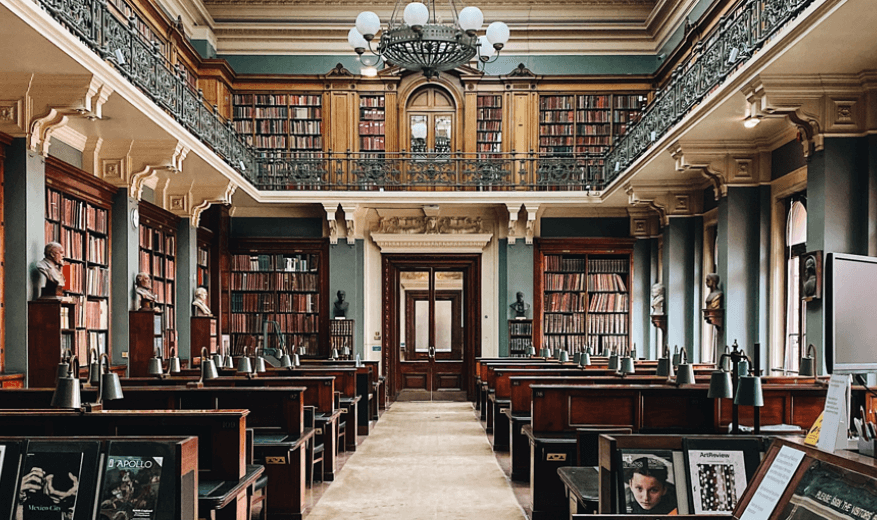
Sri Guru Hargobind Library
With the efforts of the Management of Sri Guru Nanak Satsang Sabha, the Sri Guru Hargobind Library was started in 1995. In its early days, the library held only a modest collection, with books gradually added through purchases and generous donations from generous community members and well-wishers. Today, it offers a wide range of books and multimedia materials in Punjabi, English, and Hindi, along with a welcoming space for quiet reading, research, and community learning. It has become a vital part of the services provided to the community by the Sri Guru Nanak Satsang Sabha.
The Library aims to:
• Facilitate access to and borrowing of books on Sikhism, History of Punjab, both in English and Punjabi
• Provide books on Poetry, Literature, Fiction and other subjects in Punjabi for reading and borrowing.
• Provide access to and borrowing of children books to the children.
• Promote dissemination of kirtan and katha through loans of, CDs, VCDs ,DVDs and MP3 discs
• Provide access to Reference materials and magazines
• Provide a facility for quiet reading and research
• Record and copies of CDs and MP3s of visiting Ragi Jathas’ renditions make available to the community members.
• Support the curriculum needs of the Punjabi Language Classes held by Khalsa Punjabi School or other Punjabi language s
| Opening Hours: | |
|---|---|
|
Tuesday |
9am – 5pm |
|
Wednesday |
11am – 8pm |
|
Thursday |
9am – 5pm |
|
Friday |
9am – 5pm |
|
Saturday |
9am – 5pm |
|
Sunday |
9am – 2pm |
Location:
127 Whitehorse Road,
Blackburn, VIC – 3130
(Enter via the footpath around the building; signs will direct you to the library.)
Contact:
Phone: (03) 9894 1800
For Sikhism or historical research, contact the Librarian directly at 0433 554 637 to arrange an appointment.
Note: Due to upcoming to upcoming construction, the library has been temporarily relocated to the Rumala Room. Please contact Gurpreet Singh for more details regarding access and usage.
Library Usage:
Books and monographs:
• Adult Section – Over 3,100 titles in Punjabi and English, including both fiction and non-fiction.
• Children’s Section – Approximately 500 titles in English and Punjabi.
• Reference Section – Encyclopaedias, dictionaries, and subject-specific resources on Sikhism and general topics.
• Hindi Language Section – A small but well-loved collection.
Multimedia Collection:
• Over 1,200 CDs, VCDs, DVDs, and MP3s, including recordings of kirtan, katha, and visiting Ragi Jathas.
• More than 500 items geared toward children.
Newspapers and Magazines:
The following magazines are received in the library:
• The sikh review (Monthly)
• Abstracts of Sikh Studies (Quarterly)
• Sewa jyoti (Monthly)
• Sikh Phulwari (Monthly)
• Gurmat Parkash
Library Membership & Loan Policy:
Membership:
The annual membership fee is $10 per year, covering the period from January to December.
Loan Periods & Limits:
• Books: 28 days
• Past Magazine Issues: 14 days
• CDs, DVDs, MP3s, VCDs: 14 days
• Members may borrow up to 4 items at a time, including a maximum of:
1 CD
1 VCD
1 DVD
1 MP3 disc
Lost or damaged materials:
Please report any loss or damage to library items as soon as possible. If the item is not found within two weeks, the borrower will be responsible for the replacement cost along with a $5 processing fee.
Library Conduct and Rules:
The library is a peaceful environment intended for reading, study, and respectful sharing of resources. Please follow these guidelines:
- Maintain a quiet atmosphere at all times.
- No food or drink is permitted inside.
- Bags and cases must be left with the librarian on duty.
- Take all mobile phone calls outside the library.
- Children are welcome but should be supervised by parents.
Staff and Automation:
• Librarian: TBA
• Volunteers: Two volunteers assist regularly on Sundays.
The library was originally managed using manual registers. A few months after opening, it transitioned to BOOKMARK library software, developed by the Department of Education and Child Development (Government of South Australia). All records—past and current—are now fully digitised, and borrowing is managed via this system.